
5 Modern Manufactured Homes for Sale Worth Considering
Last Updated: November 10, 2026
Quick Summary
Modern manufactured homes for sale offer finishes, layouts, and exterior details that rival site-built houses, including pitched rooflines and covered porches. Buyers should compare floor plans carefully and budget for delivery, setup, foundation, and site work beyond the base price.
Confirm whether appliances, window treatments, and skirting are included in the base price.
Multi-section homes cost more to deliver than single-section homes, and long hauls add to the fee.
Ask for a written, itemized estimate covering foundation, utilities, and permits, not just a single installation figure.
Decide structural customizations before production begins, since later changes cost more.
Get every dealer answer and warranty detail in writing before signing any contract.
Which modern home fits your lot?
Georgia Home Center helps Georgia buyers compare floor plans, pricing, and site requirements from selection to setup.
Table of Contents
What Modern Manufactured Homes Look Like Today
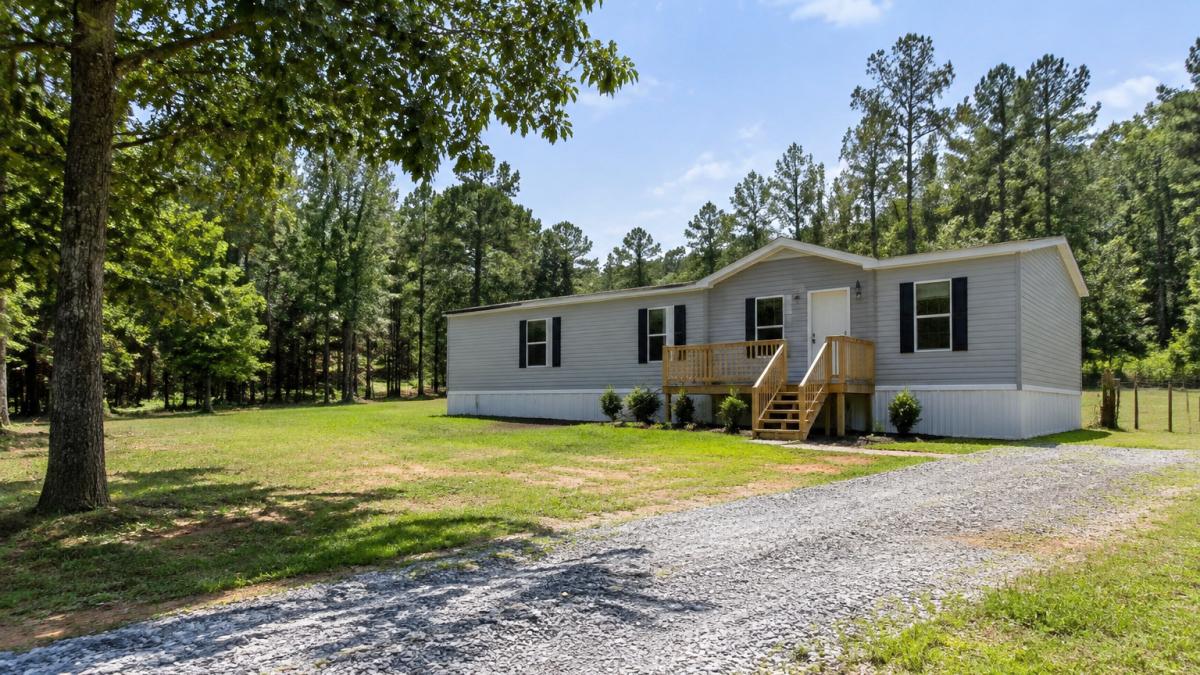
Modern manufactured homes for sale look far different from the boxy trailers many buyers still picture. Today's factory-built homes use the same kinds of finishes, layouts, and exterior details found in site-built houses.
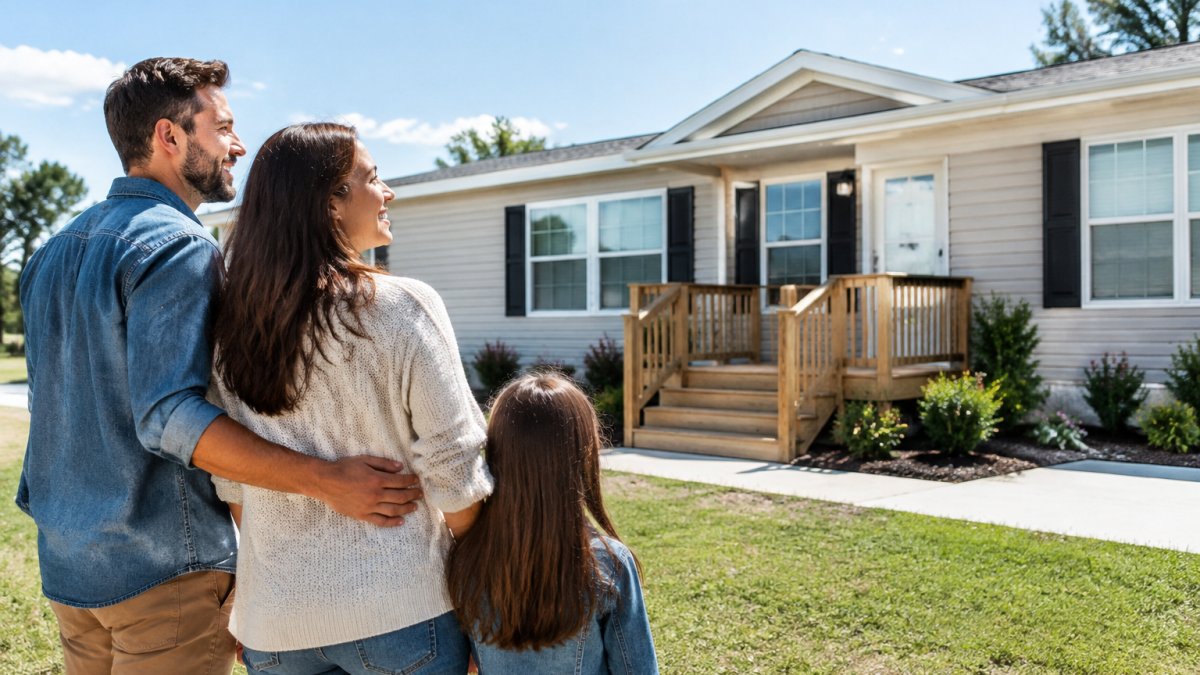
Many buyers are surprised by how much design variety is available. Pitched rooflines, covered front porches, and siding that resembles traditional construction are common features of modern designs.
Many buyers assume a manufactured home will look dated, but exterior and interior choices have expanded considerably. The real differences show up in the build process and in how the home is placed on its site.
Modern Manufactured Home Floor Plans to Compare
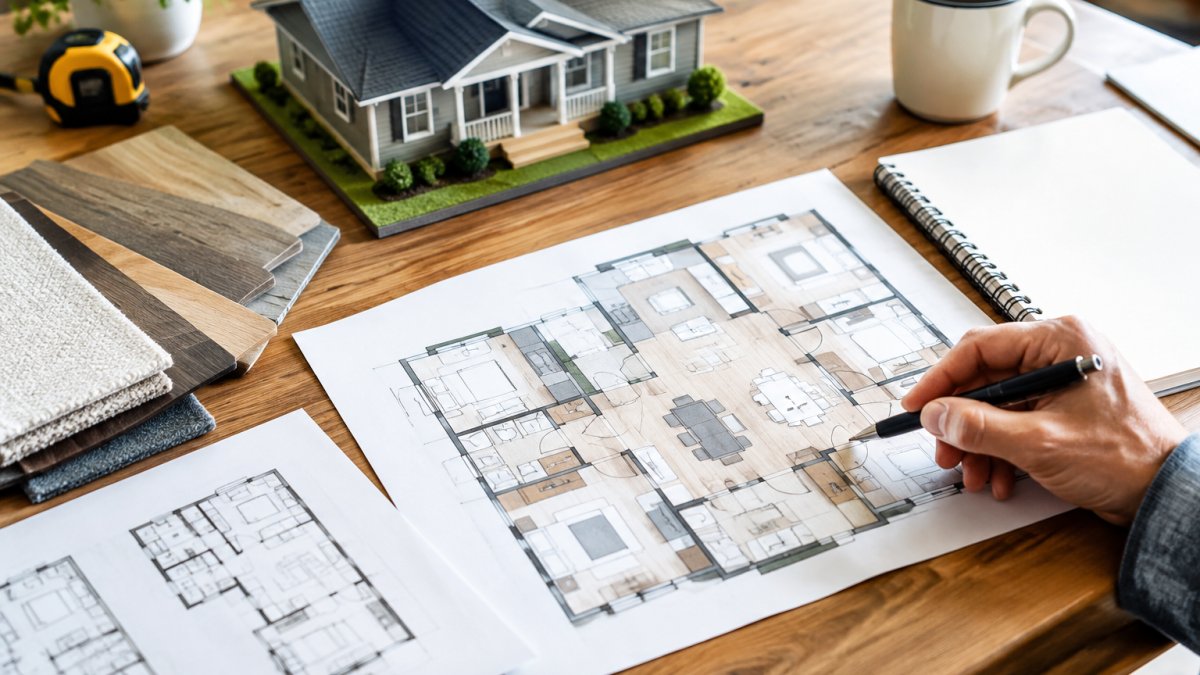
Floor plans are where the choice gets practical. Start by listing how many bedrooms and bathrooms you need, then compare square footage. Single-section homes suit smaller lots and budgets, while multi-section homes offer more room and more layout options.

Compare the kitchen and living area first, since they shape daily life most. Open layouts give a sense of space, but a separate dining room may matter more to some households. Check where the laundry sits, how the primary suite is positioned, and whether the bathrooms share walls with bedrooms.
Walk through each plan with a simple checklist:
Number of bedrooms and bathrooms
Total square footage and ceiling height
Kitchen island and pantry space
Primary suite location and closet size
Laundry room placement
!An open-concept living room and kitchen in a modern manufactured home, a couple seated on a sofa near the kitchen island
What Manufactured Homes Cost, Installed
The sticker price is only the first line of a manufactured home budget. Buyers who compare dealers on base price alone often find the final figure, once everything is added, looks very different. A useful way to read any quote is to sort each cost into one of the buckets below and ask the dealer which bucket each item falls into.
The home itself (base price). This covers the factory-built structure, the standard finish package, and any selected options. Quotes usually state a base price with a list of upgrades added on top. Confirm whether appliances, window treatments, and skirting are included, since dealers often treat these as separate line items.
Delivery and setup. Transporting a home from the factory to your lot is billed by distance and by the number of sections. Multi-section homes cost more to move than single-section homes, and long hauls add to the fee. Setup, which includes leveling the sections, joining them, and anchoring the home, is often quoted as a separate charge.
Land and site preparation. If you already own land, you still need to pay for clearing, grading, drainage, and access for the delivery truck. If you are buying land, its price is an entirely separate line from the home. Site work is where estimates vary the most, because a flat, cleared lot may need little more than a gravel pad while a sloped or wooded lot can require substantial grading and drainage.
Foundation. Foundation type depends on local code, soil conditions, and the lender or insurer's requirements. Common options include a concrete pier system, a perimeter block wall, or a full basement. Ask the dealer whether the quoted foundation is a basic pier system or an upgraded permanent foundation, because the difference in cost can be significant.
Utilities and connections. Water, sewer or septic, electrical service, and gas connections each carry their own costs. Utility company hookup fees and any required meter or tap charges are usually paid directly by the buyer and do not appear on the dealer's quote.
Permits and inspections. Local building, placement, and utility permits add fees, and some jurisdictions require separate inspections at the foundation, setup, and final stages. Confirm who is responsible for pulling each permit, because a missed permit can delay occupancy.
Financing and closing costs. Loan origination fees, appraisal costs, and title or recording charges apply if you borrow. The loan type and the property classification (personal property or real property) affect both the interest rate and the closing costs, so the total cost of the home depends partly on how it is financed.
Watch out: a quote that lists only the home price and a single "installation" figure often leaves out foundation, utilities, and permits. Ask for a written, itemized estimate that shows every bucket above, and compare dealers line by line rather than by the bottom-line number alone.
The sticker price is only part of the picture, so the article breaks the total cost into these buckets.
Cost bucket | What it covers | Note |
The home itself | Factory structure, standard finish, selected options | Confirm whether appliances and skirting are included |
Delivery and setup | Transport and joining sections | Multi-section homes cost more to move |
Land and site preparation | Clearing, grading, drainage, access | Varies most with lot condition |
Foundation | Piers, perimeter block wall, or full basement | Basic pier vs. permanent foundation can differ significantly |
Utilities and connections | Water, sewer or septic, electrical, gas | Usually paid directly by the buyer |
Permits and inspections | Local building, placement, utility permits | A missed permit can delay occupancy |
Financing and closing costs | Origination, appraisal, title or recording charges | Loan type and property classification affect costs |
Customization Options Before Your Home Is Built
Customization is generally easiest before a home enters production, since changes become more costly once construction begins.
Decide early on structural items such as window placement, bathroom layout, and whether you want a bonus room.
Watch out: a standard package may look complete but exclude items you assumed were included. Confirm every upgrade in the written contract before signing.
Questions to Ask a Dealer Before You Sign
A dealer conversation is where most avoidable problems are either caught or missed. The questions below are grouped by the stage at which they matter, and each one includes what a clear answer should sound like and what a vague answer may signal.
About the total price
What is the total installed price, including delivery, setup, and the foundation? A clear dealer will walk through each line of the quote. A vague answer such as "about this much plus extras" means you should request a written breakdown before going further.
Which options are standard, and which are upgrades? Ask for a list of exactly what the quoted price includes, since appliances, skirting, and steps are often excluded.
Does the quote include taxes, and are any fees non-refundable? Ask whether a deposit is refundable if financing falls through.
About your site
Which site preparation items are my responsibility? Get a written list covering clearing, grading, drainage, access, and utility trenching.
Do you require a specific foundation type, and does it meet local code and my lender's requirements? Confirm this before you finalize the order, because changing the foundation after production is costly.
Ask whether the dealer is licensed in your state and who holds the installation license, and verify any license numbers with the state licensing board. When you are ready to price a home, you can browse the Cordele lot's selection and pricing.
About the warranty
What warranty covers the structure, the roof, the plumbing, the electrical system, and the appliances, and for how long? Manufacturer warranties and dealer warranties often cover different parts of the home, so ask for both in writing.
Who performs warranty repairs, and how long is the typical response time? Ask whether repairs are handled by the dealer, the manufacturer, or a third-party contractor.
What is excluded from the warranty? Common exclusions include damage from improper site drainage and items that were not installed by the dealer.
About permits and inspections
Who pulls the placement, utility, and building permits, and who schedules each inspection? A dealer who handles permits should be able to name the inspection steps and their typical timing.
What happens if an inspection fails? Ask how corrections are handled and whether they are included in the price.
About financing and the closing
Which financing options do you work with, and do they affect the final price? Ask whether the home will be titled as personal or real property, because this changes both loan options and closing costs.
Is there a timeline from order to delivery, and what are the penalties for delay? A clear schedule with written milestones protects you from open-ended waits.
Get every answer in writing. A reputable dealer will explain each line item and put any promised site work into the contract. If answers stay verbal or keep changing between conversations, treat that as a reason to compare dealers before signing.
Booking a Walkthrough and Site Check with Georgia Home Center
Seeing a home in person clarifies much that photos cannot. Georgia Home Center welcomes buyers who want to explore its home tours and compare options before committing.
Reach out to Georgia Home Center for help choosing the right plan for your property. Bring your lot details, your budget range, and your list of must-have features.
Get started with Georgia Home Center and find a modern manufactured home that fits your lot and budget.
Frequently Asked Questions
How much does a modern manufactured home cost?
Prices vary with size, floor plan, finishes and the features you choose, so there is no single figure that fits every buyer. For current pricing on the models Georgia Home Center offers, check the pricing information on its website or request a quote for the exact home you are considering.
How much does it cost to install a manufactured home?
Installation cost depends on site preparation, foundation work, utility hookups, delivery distance and local permit fees. These costs are separate from the price of the home itself, so ask for an itemized estimate that lists each item. Local zoning and land-use rules can also affect what your site requires. Georgia Home Center can walk you through what a typical setup involves for your property before you commit.
What is the difference between a manufactured home and a modular home?
A manufactured home is built to the federal HUD code in a factory and moved to the site on its own chassis. A modular home is built in sections to state and local building codes and then assembled on a foundation. The two differ in construction standards, transport and how local rules treat them, so confirm which category applies to any home you are considering and how it affects financing and placement.
Comments